March 3, 2026

Inside sales has transformed from a cost-cutting alternative to field sales into a sophisticated revenue engine that powers growth for businesses across software, services, and manufacturing sectors. For companies stuck at revenue plateaus, implementing effective inside sales strategies offers a path to breakthrough performance without proportionally increasing overhead costs. The shift toward remote selling, accelerated by digital transformation and changing buyer preferences, has made inside sales not just viable but often superior to traditional approaches. Understanding how to build, optimize, and scale an inside sales function requires more than simply placing sales reps behind phones-it demands a systematic approach to process design, technology integration, and continuous performance improvement.
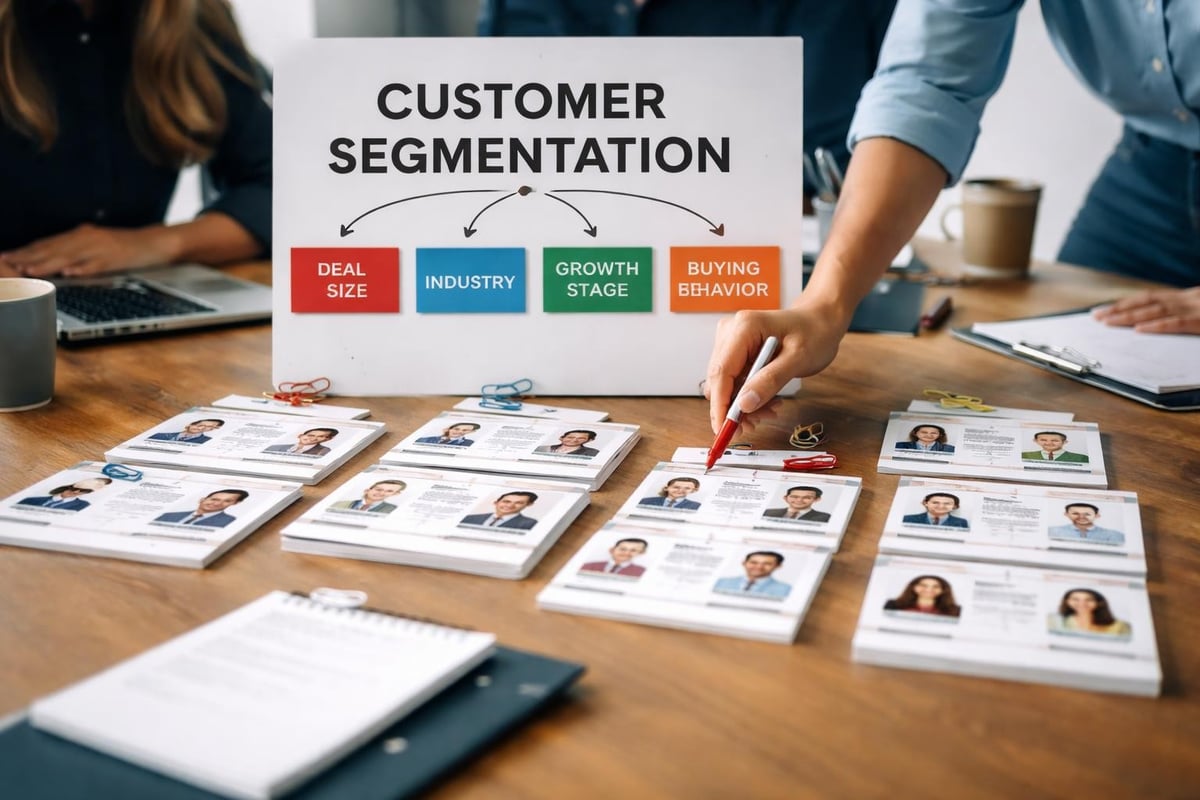
The foundation of successful inside sales strategies begins with precise market segmentation and buyer persona development. Too many organizations approach inside sales with a one-size-fits-all methodology that fails to account for the distinct needs of different customer segments.
Start by identifying which portions of your addressable market are most suitable for inside sales engagement. Generally, companies with deal sizes under $50,000 annual contract value, shorter sales cycles, and product-led growth models find inside sales particularly effective. However, these parameters shift based on industry dynamics and product complexity.
Your ideal customer profile (ICP) should extend beyond basic firmographic data to include behavioral and situational characteristics:
Once you've established your ICP, develop detailed buyer personas for each key stakeholder involved in the purchasing decision. A VP of Sales has different concerns than a CFO, and your inside sales approach must adapt accordingly.
Creating a qualification framework ensures your team invests time in opportunities with genuine potential. The BANT (Budget, Authority, Need, Timeline) framework remains relevant, but modern inside sales strategies benefit from more nuanced approaches like MEDDIC (Metrics, Economic Buyer, Decision Criteria, Decision Process, Identify Pain, Champion) that provide deeper insight into complex B2B sales scenarios.
Inside sales teams generate significantly more revenue when equipped with the right technology infrastructure. According to comprehensive research on inside sales benefits, teams using integrated sales tools achieve faster sales cycles and improved collaboration compared to those relying on disconnected systems.
Your technology stack should create a seamless workflow from initial prospecting through closed deals and customer expansion. At minimum, this includes:
| Technology Category | Primary Function | Key Capabilities |
|---|---|---|
| CRM Platform | Central data repository | Contact management, opportunity tracking, forecasting |
| Sales Engagement | Outreach automation | Email sequencing, call scheduling, task management |
| Conversation Intelligence | Call analysis | Recording, transcription, coaching insights |
| Data Enrichment | Contact information | Email discovery, firmographic data, intent signals |
| Video Conferencing | Virtual meetings | Screen sharing, recording, presentation tools |
The integration between these systems determines their collective value. Data should flow automatically between platforms, eliminating manual entry and ensuring representatives have complete context during every customer interaction.
Artificial intelligence now plays a critical role in modern inside sales strategies. AI-powered tools help teams prioritize leads based on conversion probability, suggest optimal contact timing, and even draft personalized outreach messages based on prospect behavior patterns.
Consider implementing AI in these specific applications:
At ApetureCodex, our approach to Sales Strategy includes evaluating where AI tools can create the most significant performance improvements for inside sales teams, then implementing those solutions alongside hands-on transition support to ensure adoption and results.
Process discipline separates high-performing inside sales organizations from those that struggle with inconsistent results. While individual talent matters, scalable revenue growth requires repeatable processes that work regardless of who executes them.
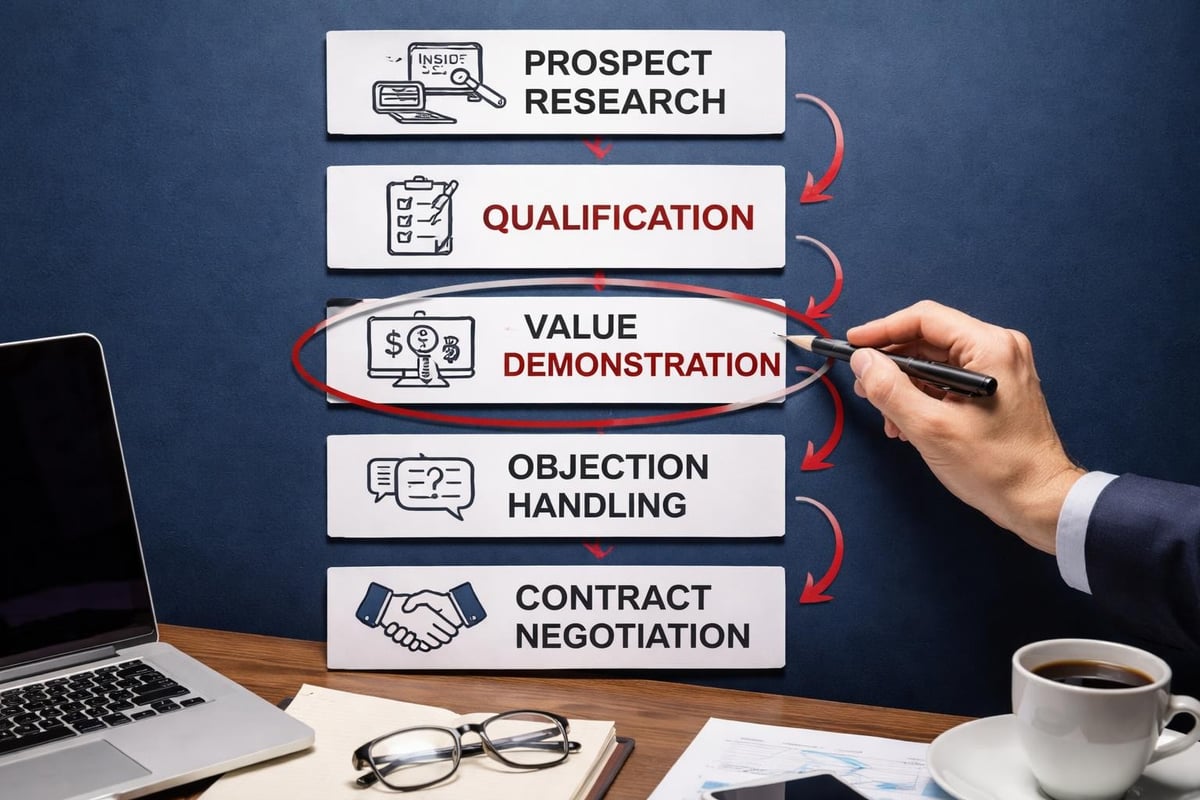
A well-designed sales cadence combines multiple touchpoints across various channels to maximize response rates. Research shows that effective inside sales teams use multi-channel approaches rather than relying solely on phone or email.
Your cadence structure should account for:
Modern buyers expect relevance and insight. Generic outreach messages generate minimal response, while thoughtful communication that demonstrates understanding of the prospect's business challenges earns engagement.
The days of transactional, feature-focused selling have passed. Today's inside sales strategies must embrace consultative approaches that position representatives as trusted advisors rather than product pushers. As outlined in essential tips for inside sales specialists, developing active listening skills and adopting consultative techniques significantly enhances sales performance.
Train your team to lead discovery conversations that uncover:
The quality of questions your representatives ask directly correlates with deal velocity and win rates. Invest heavily in question frameworks, objection handling techniques, and value articulation training.
Inside sales lends itself to detailed performance measurement that enables continuous improvement. Unlike field sales with limited visibility into daily activities, inside sales generates abundant data about representative behaviors and their correlation to results.
Establish dashboards that provide real-time visibility into both activity metrics and outcome metrics:
Activity Metrics:
Outcome Metrics:
The relationship between activity and outcomes reveals productivity patterns. A representative with high activity but low conversion needs coaching on qualification and messaging. One with strong conversion but insufficient activity needs time management and prospecting support.
Data-driven inside sales approaches enable teams to systematically test and refine their strategies based on performance evidence rather than intuition.
Implement regular performance review cycles that examine:
Use these insights to identify specific skill gaps, process bottlenecks, and opportunity areas. Many organizations plateau in revenue growth not because of market limitations but because they fail to systematically improve their sales execution.
How you organize territories and assign accounts fundamentally impacts inside sales productivity. Poor territory design creates coverage gaps, account overlap, and representative frustration.
For inside sales teams, consider these assignment models:
| Model | Best For | Advantages | Challenges |
|---|---|---|---|
| Geographic | Regional market focus | Clear boundaries, relationship building | Uneven opportunity distribution |
| Industry Vertical | Specialized expertise | Deep domain knowledge | Requires industry training |
| Account Size | Deal complexity tiers | Skill-appropriate matching | Rigid segmentation |
| Product Line | Complex portfolios | Product expertise | Coordination challenges |
| Hybrid | Mature organizations | Optimized for multiple factors | Implementation complexity |
The right model depends on your product complexity, market characteristics, and team capabilities. Most growing companies evolve through multiple models as they scale from generalist approaches toward specialized configurations.
While inside sales traditionally focuses on higher-volume, lower-touch opportunities, strategic accounts warrant more intensive engagement. Account-based selling within inside sales involves coordinating multiple touches across buying committee members, leveraging executive sponsorship, and orchestrating personalized content delivery.
For your highest-value targets, create account plans that map:
This targeted approach, as described in building effective inside sales strategies, requires defining clear objectives and implementing robust systems that support coordinated team selling rather than individual heroics.
Inside sales representatives face unique challenges that require specific skill development. Unlike field sales where relationship building happens face-to-face, inside sellers must establish rapport, read buying signals, and navigate objections entirely through remote channels.

Effective training programs address both foundational and advanced skills:
Foundational Skills:
Advanced Skills:
The most successful programs use a blended learning approach combining self-paced content, live instruction, peer learning, and real-world application with feedback. Best practices for inside sales emphasize implementing systematic approaches to common challenges like lead scoring, objection handling, and leveraging social proof through case studies.
New inside sales representatives typically require 60-90 days to reach baseline productivity, with full ramp taking 4-6 months. Structured onboarding accelerates this timeline and improves retention.
Your onboarding program should include:
Many companies make the mistake of focusing onboarding exclusively on product knowledge while neglecting selling skills, technology proficiency, and process understanding. Comprehensive programs address all dimensions of success.
Inside sales compensation significantly influences behavior, retention, and results. Poor compensation design drives unwanted behaviors, while well-structured plans align representative incentives with business objectives.
Most inside sales roles use a combination of base salary and variable compensation, with the split varying based on deal complexity and sales cycle length:
Variable compensation should tie to metrics that representatives directly control. Common approaches include:
Avoid overly complex plans that confuse representatives about how their actions translate to earnings. Transparency and simplicity drive the right behaviors.
As your inside sales function proves its effectiveness, scaling becomes the next challenge. However, simply hiring more representatives without addressing process, technology, and management infrastructure leads to declining productivity and poor results.
The lessons from successful SaaS company growth strategies apply directly to inside sales scaling: focus on unit economics, optimize before you scale, and ensure management capacity keeps pace with team growth.
Scale when you've achieved:
Premature scaling before establishing these foundations wastes resources and creates organizational dysfunction. According to insights on inside sales challenges, maintaining engagement and overcoming communication barriers becomes exponentially harder with poorly structured teams.
Inside sales roles often suffer from high turnover when representatives perceive limited advancement opportunities. Create clear career paths that enable growth:
Parallel paths allow representatives to advance as individual contributors or transition into management based on their strengths and interests. This flexibility improves retention and ensures you promote based on actual management capability rather than defaulting to top performers.
Inside sales doesn't operate in isolation. The most effective inside sales strategies integrate tightly with marketing for demand generation and with customer success for expansion opportunities.
Marketing generates leads, but inside sales determines which deserve pursuit. Establish service-level agreements (SLAs) that define:
Regular marketing-sales meetings should review conversion data, discuss messaging effectiveness, and align on target account strategies. When these functions operate collaboratively rather than adversarially, revenue growth accelerates dramatically.
Your existing customer base represents significant revenue opportunity through upsells, cross-sells, and expansions. Inside sales teams focused on customer growth achieve higher lifetime values and better retention than those exclusively pursuing new logos.
Structure your approach to customer expansion by:
As noted in comprehensive guides to nurturing and closing deals, assessing deal value and optimizing channels throughout the customer lifecycle improves overall sales efficiency and revenue predictability.
Even well-designed inside sales strategies encounter predictable challenges. Awareness of these common pitfalls enables proactive mitigation:
Insufficient qualification leading to bloated pipelines filled with low-probability opportunities that distract from genuine prospects. Solution: Implement rigorous qualification frameworks and regularly clean your pipeline.
Over-reliance on email while neglecting phone and other channels. Solution: Enforce balanced multi-channel cadences tracked through your sales engagement platform.
Technology adoption failures where expensive tools sit unused because of poor training or change management. Solution: Phase tool rollouts, provide comprehensive training, and tie usage to performance expectations.
Compensation plans that drive wrong behaviors such as prioritizing easy wins over strategic accounts. Solution: Regularly review compensation outcomes and adjust plans to align with business priorities.
Manager burnout from excessive span of control when scaling outpaces management development. Solution: Maintain appropriate manager-to-rep ratios and invest in leadership development.
Understanding the differences between inside and outside sales helps organizations avoid applying field sales approaches to inside teams, recognizing that each requires distinct processes, metrics, and management styles.
Implementing effective inside sales strategies requires systematic attention to process design, technology infrastructure, team development, and continuous optimization based on performance data. When companies stuck at revenue plateaus adopt these proven approaches, they unlock sustainable growth without proportionally increasing costs. If your organization is ready to break through revenue barriers and build a high-performing inside sales function, ApetureCodex specializes in helping software, services, and manufacturing companies transform their sales operations through strategic assessment, hands-on implementation support, and AI-enabled process improvement that delivers measurable results.