March 1, 2026

Every organization reaches inflection points where existing strategies no longer deliver expected results. Revenue plateaus, operational inefficiencies emerge, and market dynamics shift faster than internal capabilities can adapt. Understanding company needs at these critical junctures separates businesses that break through growth barriers from those that remain stagnant. For software companies, service providers, and manufacturers facing persistent revenue challenges, a systematic approach to identifying and addressing organizational needs becomes the foundation for sustainable growth.
Company needs extend far beyond surface-level symptoms like declining sales figures or customer churn rates. These visible challenges typically represent deeper structural issues within operations, talent deployment, technology infrastructure, or strategic alignment. Conducting a comprehensive needs assessment provides the diagnostic clarity necessary to identify root causes rather than simply treating symptoms.
The most effective needs assessments examine multiple organizational dimensions simultaneously. Revenue-generating functions like sales and marketing require evaluation alongside support operations, customer success workflows, and partnership ecosystems. This holistic perspective reveals how disconnects between departments create friction that inhibits growth.
When evaluating company needs, organizations should examine these core areas:
Each dimension reveals specific gaps between current performance and desired outcomes. A software company might discover its company needs include modernizing sales methodologies to match longer B2B buying cycles. A manufacturing firm could identify requirements for digital transformation to compete with more agile competitors.

Many organizations struggle with revenue growth not because they lack market opportunity, but because internal constraints prevent them from capturing available demand. These limitations often hide within organizational structures, team configurations, or outdated processes that once served the business well but now create bottlenecks.
Legacy businesses particularly face challenges when historical success patterns become obstacles to future growth. The techniques that drove initial traction may no longer align with current market conditions. Understanding what drives explosive growth in modern contexts requires willingness to examine sacred cows and question established practices.
| Constraint Type | Common Symptoms | Growth Impact |
|---|---|---|
| Process Inefficiency | Long sales cycles, manual workflows, duplicated effort | 20-35% capacity loss |
| Technology Gaps | Data silos, integration failures, limited automation | 15-30% productivity drain |
| Talent Misalignment | Unclear roles, skill deficiencies, accountability confusion | 25-40% effectiveness reduction |
| Strategic Drift | Mismatched offerings, unclear positioning, reactive planning | 30-50% opportunity cost |
Identifying these constraints requires looking beyond financial statements to examine operational realities. How many touches does it take to convert a qualified lead? Where do deals stall in the pipeline? Which customer segments generate the highest lifetime value? These questions reveal company needs that financial analysis alone cannot surface.
Modern company needs increasingly center on the intersection of people and technology. The rapid advancement of AI tools and automation platforms creates opportunities to amplify human capabilities while eliminating repetitive tasks. However, technology without proper human oversight and strategic direction rarely delivers promised returns.
A People and Technology Audit can reveal mismatches between available tools and actual utilization, identify automation opportunities within existing workflows, and highlight where strategic technology investments could multiply team effectiveness. This assessment addresses company needs from both dimensions simultaneously rather than treating them as separate initiatives.
Organizations should evaluate technology needs through these lenses:
The goal extends beyond simply acquiring new tools. Effective technology integration aligns with strategic objectives, enhances rather than replaces human judgment, and scales naturally as the organization grows.
Not all company needs deserve equal attention or resources. Organizations with limited bandwidth must prioritize initiatives that deliver the greatest impact on revenue growth and profitability. Systematic needs analysis frameworks help leadership teams distinguish between urgent symptoms and strategic priorities.
The prioritization process should consider multiple factors simultaneously. Revenue impact provides one critical dimension, but implementation complexity, resource requirements, and timeline to results also influence which initiatives move forward first.
High-priority company needs typically share these characteristics:
Mid-stage software companies often discover their highest-priority needs involve sales methodology refinement and marketing strategy alignment. Manufacturing firms frequently identify supply chain optimization and customer success program development as critical focus areas.

Addressing company needs rarely fits neatly within single departmental boundaries. Revenue challenges stem from disconnects between marketing's lead generation, sales conversion processes, customer success retention efforts, and partnership development initiatives. Siloed solutions that optimize individual functions without considering interdependencies often create new problems while solving old ones.
Effective needs-based strategies require cross-functional collaboration from assessment through implementation. Marketing teams must understand sales capacity constraints when planning campaign investments. Sales leadership needs visibility into customer success metrics that indicate expansion opportunities. Partnership functions should align with both marketing positioning and customer success capabilities.
| Implementation Phase | Key Activities | Success Metrics |
|---|---|---|
| Discovery | Stakeholder interviews, data analysis, process mapping | Comprehensive needs documentation |
| Strategy Development | Priority setting, solution design, resource planning | Aligned roadmap with clear ownership |
| Pilot Programs | Limited scope testing, feedback collection, iteration | Validated approaches before scaling |
| Scaled Deployment | Broad implementation, training delivery, change management | Adoption rates, performance improvements |
| Optimization | Performance monitoring, continuous refinement, capability building | Sustained results, efficiency gains |
This structured approach addresses company needs systematically while maintaining operational continuity. Rather than disrupting everything simultaneously, organizations implement changes in managed waves that allow teams to adapt and leadership to course-correct based on early results.
Many organizations struggle to objectively assess their own company needs. Internal teams develop blind spots around long-standing practices, political dynamics complicate honest evaluation, and day-to-day operational demands leave little bandwidth for strategic analysis. External needs assessments bring fresh perspectives unencumbered by institutional assumptions.
Growth strategy partners who specialize in helping stuck organizations break through revenue plateaus offer particular value. They've seen patterns across industries, understand which interventions deliver results, and can identify opportunities that internal teams overlook. This external viewpoint complements internal knowledge rather than replacing it.
The most effective partnerships combine outside expertise with inside ownership. External consultants diagnose issues and design solutions, but internal teams drive implementation with hands-on support. This model builds organizational capability while addressing immediate company needs.
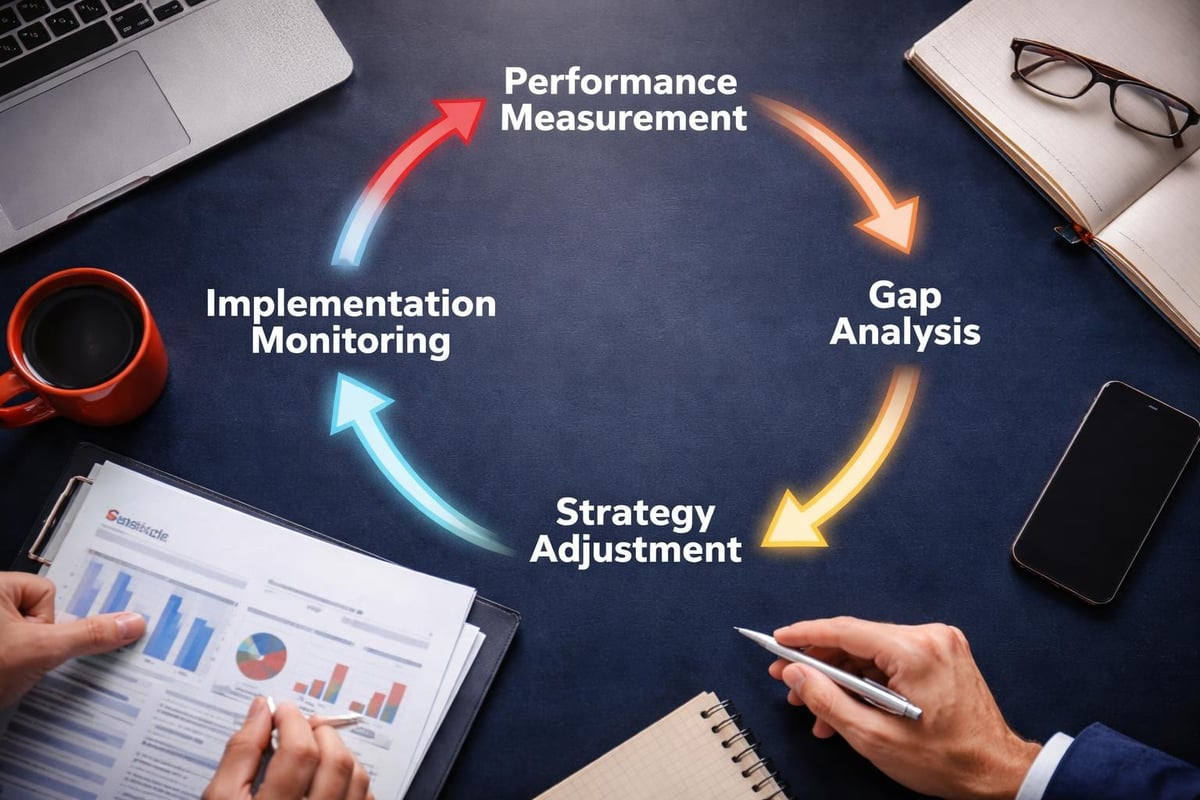
Company needs evolve as organizations grow and markets shift. Assessment shouldn't be a one-time exercise but rather an ongoing discipline that keeps strategies aligned with current realities. Establishing clear metrics and review cadences ensures that initiatives continue addressing relevant needs rather than solving yesterday's problems.
Essential tracking mechanisms include:
These regular checkpoints create opportunities to validate that selected initiatives still align with company needs and adjust course when circumstances change. A software company might discover that initial sales process improvements delivered expected results but revealed new needs around customer onboarding and expansion selling.
Perhaps the most overlooked aspect of addressing company needs involves creating organizational alignment around identified priorities. Even perfectly designed strategies fail when teams don't understand how their daily work connects to strategic objectives or when competing initiatives pull resources in different directions.
Clear communication about company needs, why they matter, and how addressing them benefits the organization creates the context teams need to make good decisions. Sales representatives who understand the strategic rationale behind new methodologies embrace change more readily than those simply told to follow new procedures.
Successful alignment strategies incorporate these elements:
This approach transforms company needs from abstract leadership concepts into concrete team objectives that everyone understands and supports. When marketing teams grasp how their lead quality improvements help sales achieve quota, they naturally adjust targeting and messaging. When customer success managers recognize how retention metrics impact overall revenue goals, they prioritize expansion conversations differently.
Organizations don't need to reinvent assessment methodologies from scratch. Proven needs analysis templates and frameworks provide starting points that can be customized to specific industries and situations. These resources help teams structure their evaluation process, ensure comprehensive coverage of key areas, and document findings in actionable formats.
The right framework depends on organizational maturity, industry dynamics, and specific challenges being addressed. Start-ups facing rapid scaling needs require different assessment approaches than established manufacturers pursuing digital transformation. Service businesses navigating competitive disruption need frameworks that examine different variables than software companies optimizing recurring revenue models.
Regardless of specific methodology chosen, effective frameworks share common characteristics. They separate symptoms from root causes, prioritize needs based on strategic impact, consider implementation feasibility alongside potential benefits, and create clear paths from assessment findings to actionable initiatives.
The pace of market change in 2026 makes static planning obsolete. Company needs identified during annual planning cycles may shift significantly before implementation completes. Organizations that build continuous assessment into their operational rhythms adapt faster and maintain alignment with evolving market conditions.
This doesn't require constant upheaval or strategy changes every quarter. Rather, it means establishing mechanisms that surface early warning signals when assumptions change, new opportunities emerge, or selected approaches underperform expectations. These signals trigger focused reviews of specific areas rather than comprehensive organizational assessments.
Technology enablement plays an increasing role in continuous assessment. Modern analytics platforms surface performance trends automatically, AI tools identify pattern changes in customer behavior or competitive dynamics, and integrated systems provide real-time visibility into operational metrics that once required manual compilation.
The organizations that thrive aren't necessarily those that predict the future most accurately. Instead, they excel at recognizing when company needs have shifted and adapting their strategies accordingly. This organizational agility, built on continuous assessment and rapid adjustment capabilities, becomes a sustainable competitive advantage in volatile markets.
Understanding and addressing company needs provides the foundation for breaking through revenue plateaus and achieving sustainable growth. Organizations that systematically assess their capabilities, prioritize high-impact initiatives, and implement solutions through aligned teams position themselves to capture market opportunities that competitors miss. ApetureCodex partners with software, service, and manufacturing companies stuck at specific revenue levels, working hands-on to improve sales, marketing, customer success, and partnership strategies while optimizing teams and processes with modern tools and techniques.


HockeyStack has quickly become one of the fastest-growing SaaS startups, securing $20M in funding and redefining how B2B companies approach analytics. But what exactly did they do right? This article breaks down five key lessons SaaS founders can learn from HockeyStack’s success, including how they owned a critical market gap, leveraged AI agents, built a demand-generation engine, mastered community-led growth, and secured smart funding. If you're looking to scale your SaaS startup the right way, these insights will help you move faster and avoid common pitfalls.