March 11, 2026

Engineering teams serve as the backbone of innovation for software companies, service providers, and manufacturing businesses seeking to break through revenue plateaus. When these teams operate at peak efficiency, they don't just build products; they create sustainable competitive advantages that directly impact profitability and market position. However, many organizations struggle to structure their engineering teams in ways that align technical excellence with business objectives, leaving significant revenue opportunities untapped.
Modern engineering teams must balance multiple priorities simultaneously: delivering quality products, maintaining existing systems, innovating new solutions, and contributing to overall business strategy. This multifaceted responsibility requires a fundamental shift from viewing engineering as a cost center to recognizing it as a revenue driver.
High-performing engineering teams generate revenue growth through:
The connection between engineering excellence and financial performance becomes clear when teams align their technical roadmaps with revenue goals. Organizations that successfully make this alignment often see dramatic improvements in both product quality and market competitiveness.
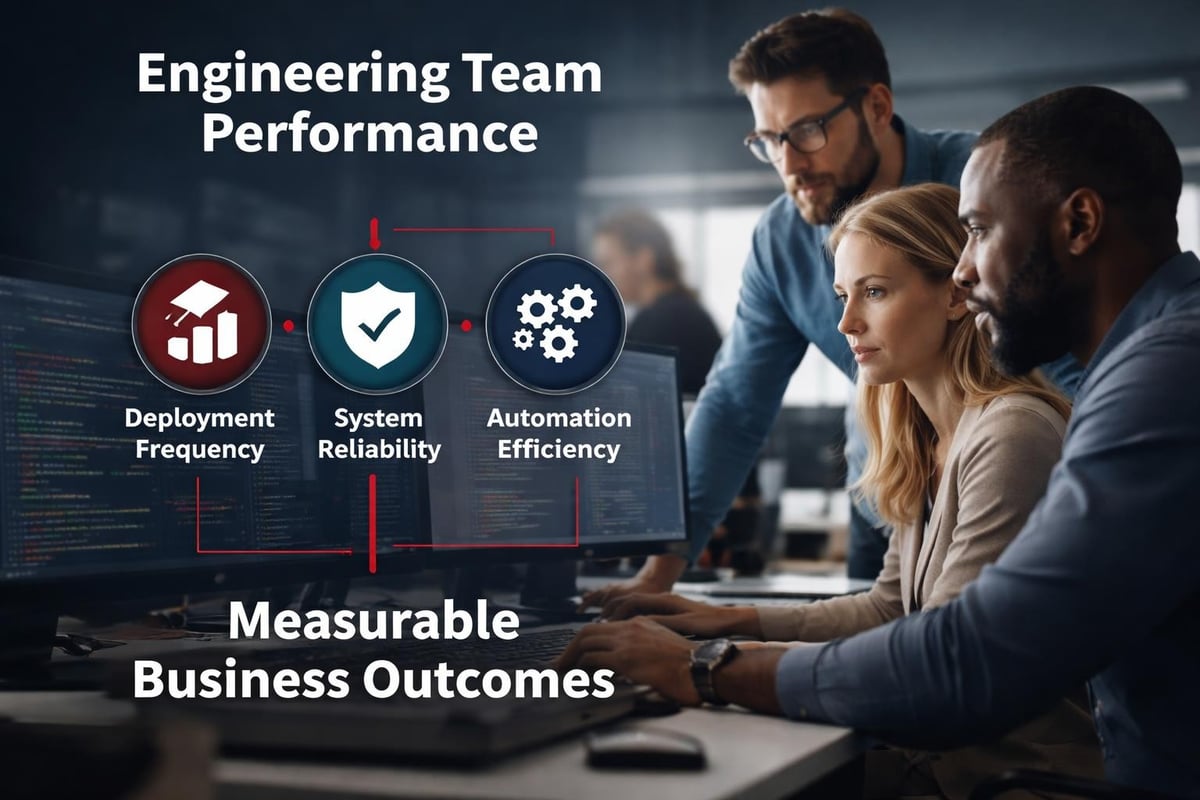
Traditional engineering metrics like sprint velocity or code commits tell only part of the story. Revenue-focused organizations need to track how engineering work translates into business value. This requires establishing clear connections between technical initiatives and financial outcomes.
| Engineering Metric | Business Impact | Revenue Connection |
|---|---|---|
| Deployment Frequency | Faster Feature Delivery | Competitive Advantage |
| System Uptime | Customer Satisfaction | Retention & Expansion |
| Automation Coverage | Operational Efficiency | Cost Reduction |
| Technical Debt Ratio | Development Velocity | Innovation Capacity |
The organizational structure of engineering teams directly influences their ability to deliver results. Companies stuck at revenue plateaus often discover that their engineering structure has become a bottleneck rather than an enabler of growth.
Successful engineering teams in 2026 typically organize around one of several proven models. Product-aligned teams focus on specific customer-facing features or services, enabling rapid iteration based on market feedback. Platform teams build the foundational infrastructure that other teams leverage, creating economies of scale. Hybrid models combine both approaches, allowing flexibility based on project requirements and organizational maturity.
Engineering teams cannot operate in isolation if they want to drive revenue growth. The most effective teams maintain strong connections with sales, marketing, customer success, and partnership functions. This cross-functional approach ensures that technical decisions reflect real market needs and customer pain points.
When engineering teams participate in customer discovery sessions, they gain firsthand understanding of user challenges. This direct exposure often sparks innovation that sales-driven feature requests miss entirely. Similarly, collaboration with customer success teams reveals patterns in support tickets that indicate opportunities for preventive engineering solutions.
Key collaboration touchpoints include:
Culture determines whether engineering teams merely complete tasks or actively seek ways to contribute to business growth. Organizations serious about scaling revenue invest deliberately in cultural elements that promote ownership, innovation, and accountability.
Best practices for managing engineering teams emphasize the importance of psychological safety, where team members feel comfortable proposing unconventional solutions or challenging assumptions. This foundation enables the risk-taking necessary for breakthrough innovations.
Recognition systems play a crucial role in reinforcing desired behaviors. Engineering teams that receive acknowledgment for business impact, not just technical achievement, naturally orient their work toward revenue-generating activities. This might mean celebrating a performance optimization that reduced infrastructure costs by 30% with the same enthusiasm as launching a major new feature.
The tension between process and creativity challenges many engineering organizations. Too much structure stifles innovation; too little creates chaos that slows delivery. The solution lies in establishing clear frameworks while preserving autonomy within those boundaries.
Sprint retrospectives and team-building practices provide structured opportunities for continuous improvement. These sessions allow engineering teams to identify process bottlenecks, share knowledge across specialties, and propose experimental approaches to persistent challenges.
Dedicated innovation time, whether through hackathons, 20% projects, or exploration sprints, gives engineers space to investigate new technologies or approaches that might unlock competitive advantages. Many breakthrough products started as side projects that engineers pursued during these designated innovation periods.
The tools engineering teams use significantly impact their productivity and ability to deliver revenue-generating work. However, tool proliferation can create as many problems as it solves, leading to fragmented workflows and integration headaches.
Strategic tooling decisions balance several competing concerns: developer experience, operational efficiency, integration capabilities, and total cost of ownership. Productivity applications for engineering collaboration have evolved considerably, offering sophisticated features for project tracking, communication, and workflow automation.

Essential tool categories for modern engineering teams:
The right combination varies based on team size, technical stack, and organizational maturity. What remains constant is the need for thoughtful integration that creates a cohesive workflow rather than a collection of disconnected tools.
Artificial intelligence has transformed how engineering teams approach routine tasks, code review, testing, and even architectural decisions. Research on human-AI collaboration in software development demonstrates significant productivity gains when teams effectively integrate AI capabilities into their workflows.
AI pair programming tools help engineers write code faster while maintaining quality standards. Automated testing frameworks powered by machine learning identify edge cases that human testers might overlook. Predictive analytics anticipate system failures before they impact customers, reducing downtime and preserving revenue.
However, successful AI adoption requires more than just deploying new tools. Engineering teams need training on effective AI collaboration, guidelines for validating AI-generated outputs, and clear policies around AI usage in production systems.
Engineering leadership differs fundamentally from technical individual contribution. The transition from senior engineer to engineering manager often challenges professionals accustomed to solving problems through code rather than through people.
Effective engineering leaders focus on removing obstacles that prevent their teams from delivering value. This might involve negotiating for additional resources, refactoring organizational processes, or shielding engineers from distracting requests that don't align with strategic priorities.
Technical excellence and strategic leadership combined create engineering managers capable of driving both technical quality and business outcomes. These leaders maintain enough technical depth to make informed architectural decisions while developing the business acumen to connect engineering work to revenue impact.
Growing engineering teams face constant pressure to hire new talent while developing existing team members. The most sustainable approach builds robust internal development programs that prepare engineers for expanding responsibilities as the organization scales.
These investments pay dividends when engineers choose to grow with the organization rather than seeking advancement elsewhere. Reduced turnover preserves valuable context and relationships that contribute to engineering team effectiveness.
Disconnection between engineering roadmaps and business strategy represents one of the most common reasons companies plateau at specific revenue levels. Engineering teams may be highly productive while working on initiatives that don't move key business metrics.
Strategic alignment begins with shared understanding of business objectives across all functions. Engineering leaders must participate in revenue planning sessions, understand market dynamics, and appreciate how technical decisions enable or constrain business opportunities. Similar to how SaaS executives need broader strategic thinking, engineering leaders benefit from developing business acumen beyond their technical expertise.
| Alignment Challenge | Impact on Revenue | Solution Approach |
|---|---|---|
| Isolated Engineering Priorities | Missed Market Opportunities | Joint Planning Sessions |
| Unclear ROI on Technical Projects | Inefficient Resource Allocation | Business Case Requirements |
| Limited Customer Input | Products Missing Target Needs | Direct Customer Engagement |
| Technical Debt Accumulation | Slowing Innovation Velocity | Balanced Roadmap Allocation |
Conducting a People and Technology Audit helps organizations identify specific gaps between current engineering capabilities and the technical foundation needed to support revenue goals. This diagnostic approach reveals where process improvements, role clarifications, or technology upgrades would generate the highest return on investment.

Engineering teams that excel at one stage of company growth often struggle when the organization transitions to the next phase. A scrappy startup team that thrived on rapid prototyping may find their approaches inadequate when the company needs enterprise-grade reliability and security.
Early-stage engineering teams prioritize speed and experimentation. They accept technical shortcuts in exchange for faster market validation. This approach makes sense when survival depends on finding product-market fit quickly.
Growth-stage engineering teams shift focus toward:
Mature engineering organizations balance innovation with stability. They maintain the ability to experiment with new technologies while ensuring core systems remain reliable and performant. Understanding these growth patterns helps engineering leaders anticipate challenges and prepare their teams for upcoming transitions.
Technical debt accumulates in every engineering organization. The question isn't whether it exists but how deliberately teams manage it. Uncontrolled technical debt eventually constrains an organization's ability to ship new features, respond to competitive threats, or scale infrastructure to meet demand.
Strategic technical debt management treats it as an investment decision rather than a moral failing. Some debt makes sense to carry when it enables faster validation of uncertain hypotheses. Other debt should be addressed immediately because it creates unacceptable risks or costs.
Engineering teams need explicit allocation in their roadmaps for addressing technical debt. A common approach dedicates a percentage of each sprint to refactoring, updating dependencies, improving test coverage, or modernizing legacy systems. This consistent investment prevents debt from accumulating to crisis levels.
The shift toward remote work has fundamentally changed how engineering teams collaborate, communicate, and build culture. Distributed engineering teams offer access to global talent pools and operational flexibility, but they also introduce coordination challenges that can slow delivery if not addressed deliberately.
Successful distributed engineering teams invest heavily in asynchronous communication practices. They document decisions, maintain comprehensive wikis, and record discussions so team members across time zones can stay informed. Software engineering management practices for distributed teams emphasize clear ownership, well-defined interfaces between components, and regular synchronization points.
Critical success factors for distributed engineering include:
Time zone differences can actually benefit continuous delivery when teams structure work to enable "follow-the-sun" development. One geographic region hands off work to another, creating nearly continuous progress on critical initiatives.
Clear performance expectations and accountability systems separate high-performing engineering teams from mediocre ones. However, many organizations struggle to define what good performance looks like for engineers beyond subjective assessments or simplistic metrics like lines of code written.
Effective performance management for engineering teams combines quantitative metrics with qualitative assessments. It considers both individual contributions and collaborative behaviors that strengthen the entire team. Practical management approaches balance recognition of technical achievements with acknowledgment of mentoring, documentation, and cross-functional collaboration.
Regular one-on-one meetings between engineers and their managers create space for feedback, career development discussions, and early identification of challenges. These conversations should focus on growth opportunities, not just project status updates that could be communicated asynchronously.
Engineering talent markets remain highly competitive in 2026, particularly for specialists in emerging technologies or experienced leaders who can scale teams. Compensation packages must reflect market realities while maintaining internal equity and financial sustainability.
Beyond base salary, engineering teams value equity participation, professional development budgets, flexible work arrangements, and challenging technical problems. Organizations competing primarily on cash compensation often lose to companies offering superior learning opportunities, better work-life balance, or more meaningful missions.
Regular compensation reviews ensure that high performers receive recognition before they begin exploring external opportunities. Proactive adjustments based on market data and individual performance demonstrate organizational commitment to retaining valuable team members.
Building engineering teams that drive sustainable revenue growth requires intentional focus on structure, culture, tooling, and alignment with business objectives. Organizations that treat engineering as a strategic revenue function rather than a technical cost center unlock competitive advantages that translate directly to profitability. If your engineering teams have the talent but lack the strategic framework to maximize their revenue impact, ApetureCodex helps software, services, and manufacturing companies transform technical capabilities into growth engines through optimized processes, aligned roles, and strategic AI integration.