March 5, 2026

Support SaaS platforms have evolved from basic ticketing systems into comprehensive revenue growth engines. Companies that previously viewed customer support as a cost center now recognize it as a strategic differentiator that directly impacts retention, expansion, and profitability. For businesses stuck at revenue plateaus, reimagining customer support infrastructure represents one of the fastest pathways to breakthrough growth. Modern support SaaS solutions combine artificial intelligence, automation, and data analytics to transform how companies engage with customers at every stage of the lifecycle.
Support SaaS platforms fundamentally reshape how companies generate and protect revenue. Unlike traditional support models that focus solely on issue resolution, modern platforms create systematic opportunities for expansion, cross-selling, and retention throughout every customer interaction.
The financial implications are substantial. According to customer experience statistics in the SaaAS industry, companies with superior support systems experience significantly lower churn rates and higher customer lifetime values. Support teams equipped with proper SaaS infrastructure identify upsell opportunities 40% more frequently than those using legacy systems.
Key revenue drivers from support SaaS include:

Support SaaS infrastructure also enables companies to segment customers based on value and behavior. High-value accounts receive white-glove treatment automatically, while automation handles routine inquiries for smaller customers. This stratification ensures resources align with revenue potential.
Traditional support models break down as companies grow. The ratio of support staff to customers becomes unsustainable, response times increase, and quality deteriorates. Support SaaS platforms solve this scalability challenge through intelligent automation and process optimization.
The foundation of scalable support SaaS begins with comprehensive knowledge management. Companies must document every common issue, create self-service resources, and empower customers to solve problems independently. Best practices for delivering exceptional SaaS support emphasize building robust knowledge bases that reduce ticket volume by 30-50%.
| Scalability Component | Traditional Approach | Support SaaS Approach | Impact |
|---|---|---|---|
| Knowledge Base | Static documents | AI-powered suggestions | 45% deflection rate |
| Ticket Routing | Manual assignment | Intelligent automation | 60% faster routing |
| Response Templates | Copy-paste answers | Contextual automation | 3x faster replies |
| Quality Assurance | Random sampling | 100% AI review | Consistent quality |
Multi-channel support represents another critical scalability element. Customers expect support through email, chat, phone, social media, and in-app messaging. Support SaaS platforms unify these channels into single customer views, preventing duplicate tickets and ensuring context preservation across touchpoints.
Team specialization becomes possible with proper support SaaS infrastructure. Instead of generalists handling all inquiries, companies can route technical issues to engineers, billing questions to finance specialists, and feature requests to product managers. This specialization improves resolution quality while reducing average handling time.
Artificial intelligence has transformed support SaaS from reactive ticketing systems into predictive customer success platforms. The shift toward AI-powered support systems enables companies to anticipate customer needs before issues escalate.
AI chatbots now handle 60-70% of routine inquiries without human intervention. These systems understand natural language, access knowledge bases, perform account actions, and escalate complex issues seamlessly. The technology has matured beyond simple decision trees into sophisticated conversational interfaces that maintain context across multiple interactions.
Sentiment analysis represents another powerful AI application within support SaaS. Systems automatically detect frustration, urgency, and satisfaction levels in customer communications. This detection triggers appropriate responses-escalating angry customers to senior representatives while routing satisfied customers to expansion teams.
Advanced AI capabilities in modern support SaaS:
The emerging trends in SaaS customer support for 2025 highlight AI-human hybrid models as the optimal approach. Pure automation frustrates customers with complex needs, while pure human support cannot scale economically. The combination leverages AI efficiency with human empathy and problem-solving capabilities.

For revenue-focused organizations, AI within support SaaS also identifies expansion opportunities. Machine learning algorithms analyze customer behavior, product usage, and support interactions to flag accounts ready for upsells. These signals integrate directly into CRM systems, enabling coordinated growth strategies.
Support SaaS platforms generate enormous volumes of customer data. Companies that extract actionable insights from this data gain significant competitive advantages in retention and growth strategies.
Ticket analytics reveal which features cause the most confusion, which workflows frustrate users, and where product improvements would have maximum impact. This intelligence flows directly to product teams, creating feedback loops that improve the core offering. Companies using this approach reduce support volume by fixing root causes rather than repeatedly addressing symptoms.
Support interactions provide early warning signals about account health. Frequency of tickets, severity of issues, sentiment trends, and resolution satisfaction all indicate customer stability or risk.
Modern support SaaS platforms automatically calculate health scores based on these factors. Accounts showing declining scores trigger proactive outreach from customer success teams before churn occurs. This predictive approach prevents revenue loss rather than reacting to cancellations.
Integration between support SaaS and revenue systems creates comprehensive customer views. Support teams see contract values, renewal dates, and expansion opportunities while assisting customers. This context enables strategic conversations that extend beyond immediate issues to long-term partnership value.
The Customer Service Strategy service focuses on extracting these revenue opportunities from customer data, developing strategic plans, and implementing them alongside internal teams to drive measurable growth.
| Metric Category | What It Measures | Revenue Impact | Monitoring Frequency |
|---|---|---|---|
| Response Time | Speed of initial reply | Churn prevention | Real-time |
| Resolution Time | Issue completion speed | Satisfaction impact | Daily |
| CSAT Score | Customer satisfaction | Renewal predictor | Per interaction |
| Ticket Volume Trends | Support demand patterns | Resource planning | Weekly |
| Feature Request Frequency | Product gap identification | Development priorities | Monthly |
Effective support SaaS rarely exists as a single platform. Companies build integrated tech stacks that connect support tools with CRM, product analytics, marketing automation, and communication platforms.
The core support SaaS platform serves as the central hub. Zendesk, Intercom, Freshdesk, and Help Scout represent popular options, each with different strengths. Selection criteria should emphasize integration capabilities, automation sophistication, and alignment with existing business systems.
Essential integrations for revenue-focused support SaaS:
API connectivity determines integration success. Modern support SaaS platforms offer extensive APIs that enable custom workflows and data synchronization. Companies should evaluate API documentation, rate limits, and webhook capabilities during platform selection.
Strategic outsourcing and AI-human hybrid support models are becoming increasingly common as companies recognize the specialized expertise required to optimize support SaaS infrastructure. Building internal capabilities requires significant time and resources, while specialized partners bring immediate best practices and implementation experience.
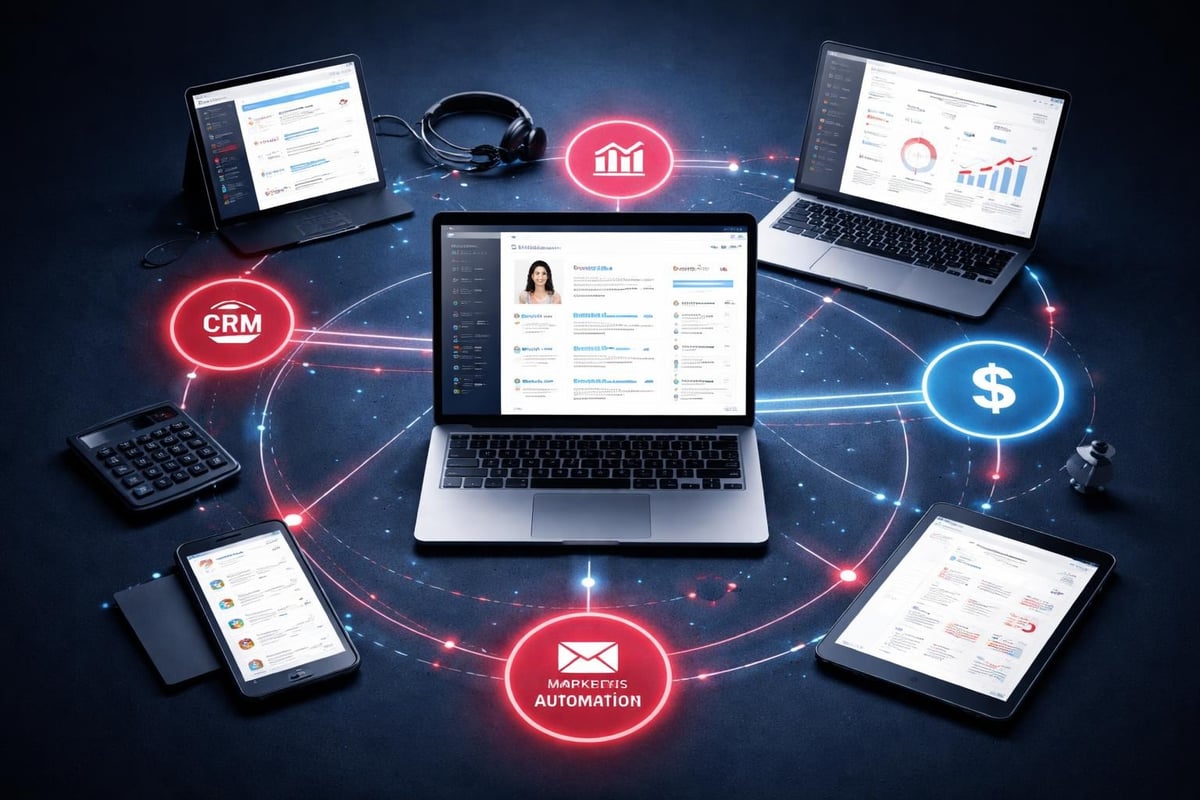
Data architecture considerations become critical as support SaaS stacks grow complex. Customer information must synchronize bidirectionally, maintaining consistency across systems. Companies need clear data governance policies defining which system serves as the source of truth for different data types.
Technology alone does not transform support operations. Companies must redesign processes to leverage support SaaS capabilities fully. This optimization requires examining every customer touchpoint and eliminating friction systematically.
Proactive support represents a fundamental process shift enabled by modern support SaaS. Instead of waiting for customers to report issues, companies monitor system health, usage patterns, and known bugs to reach out before problems impact workflows. Effective SaaS customer support strategies emphasize this proactive engagement framework as essential for competitive differentiation.
Ticket deflection through self-service requires intentional process design. Companies must create comprehensive documentation, record video tutorials, build interactive guides, and surface relevant resources at decision points. Support SaaS platforms enable this deflection through intelligent content suggestions based on the customer's current context.
Manual tasks consume support team capacity that could focus on complex customer needs. Support SaaS platforms automate repetitive workflows, freeing human agents for high-value interactions.
Quality assurance processes also benefit from support SaaS automation. Every interaction can be reviewed by AI systems checking for brand compliance, policy adherence, and resolution completeness. This comprehensive review was impossible with manual sampling approaches.
Escalation workflows become more sophisticated with support SaaS infrastructure. Instead of simple time-based escalations, modern systems consider customer value, issue complexity, sentiment trends, and team capacity. This intelligent routing ensures critical issues receive appropriate attention without overwhelming senior team members.
Organizational design must align with support SaaS capabilities to maximize effectiveness. Traditional support hierarchies often conflict with modern platform workflows, creating inefficiencies that undermine technology investments.
Specialized support teams organized by product area, customer segment, or issue type leverage support SaaS routing capabilities. The platform automatically directs inquiries to appropriate specialists based on content analysis, customer attributes, and historical resolution patterns. This specialization improves first-contact resolution rates while building deep expertise within team segments.
Cross-functional collaboration becomes seamless with proper support SaaS implementation. Engineering teams access support tickets directly to understand customer pain points. Product managers review feature requests aggregated from thousands of interactions. Sales teams receive notifications when support interactions reveal expansion opportunities.
Organizational best practices for support SaaS success:
Performance management shifts from volume metrics toward outcome-based measurements. Rather than tracking tickets closed per hour, companies measure customer satisfaction, revenue impact, and proactive engagement effectiveness. Support SaaS analytics enable this sophisticated performance tracking.
The strategies that drive explosive growth often include reimagining support as a revenue driver rather than a cost center, requiring both technological infrastructure and organizational transformation.
Transitioning to modern support SaaS infrastructure requires careful planning and phased execution. Companies that attempt overnight migrations risk service disruptions and team resistance that undermine long-term success.
Assessment phases should precede technology selection. Companies must document current processes, identify pain points, measure baseline metrics, and define success criteria. This groundwork ensures platform selection aligns with actual business needs rather than feature checklists.
Pilot programs de-risk implementation by testing platforms with limited scope before full deployment. Companies might begin with one product line, customer segment, or geographic region. This controlled approach reveals integration challenges, workflow gaps, and training needs before they impact the entire customer base.
| Implementation Phase | Duration | Key Activities | Success Metrics |
|---|---|---|---|
| Assessment | 2-4 weeks | Process mapping, pain point identification | Requirements documentation |
| Platform Selection | 3-6 weeks | Vendor evaluation, integration testing | Platform decision |
| Pilot Launch | 6-8 weeks | Limited deployment, workflow refinement | Team feedback, customer impact |
| Full Migration | 8-12 weeks | Complete rollout, training, optimization | Adoption rate, performance metrics |
| Optimization | Ongoing | Continuous improvement, feature adoption | Revenue impact, efficiency gains |
Change management determines implementation success as much as technical execution. Support teams must understand how new platforms improve their work rather than simply adding complexity. Companies should involve frontline agents in platform selection and workflow design to build ownership and enthusiasm.
Multi-channel support implementation and personalized support delivery require careful coordination across customer touchpoints. Email, chat, phone, and social channels must provide consistent experiences while leveraging each medium's unique strengths.
Quantifying return on investment from support SaaS justifies ongoing optimization and demonstrates business value to stakeholders. Revenue-focused companies should track both cost reduction and revenue generation metrics.
Cost metrics include reduced staffing requirements through automation, decreased ticket volume via self-service deflection, and lower training expenses from improved knowledge management. These savings are measurable and immediate.
Revenue metrics prove more valuable but require longer measurement periods. Customer retention improvements, expansion revenue from support-identified opportunities, and faster time-to-value for new customers all contribute to top-line growth attributable to superior support infrastructure.
Critical ROI metrics for support SaaS:
Comparative analysis against industry benchmarks provides context for internal metrics. Best practices for SaaS customer support include regular benchmarking against similar companies to identify improvement opportunities and validate progress.
Attribution modeling connects support interactions to revenue outcomes. When customers increase spending after support engagement, companies can quantify the revenue impact of excellent service delivery. This attribution requires integrated systems that track customer journeys across support, sales, and product touchpoints.
Long-term value creation from support SaaS extends beyond immediate metrics. Brand reputation, word-of-mouth referrals, and competitive differentiation all result from superior support experiences but resist precise quantification. Companies should balance quantitative ROI analysis with qualitative feedback from customers and team members.
Modern support SaaS infrastructure transforms customer service from a reactive cost center into a proactive revenue driver through intelligent automation, data integration, and process optimization. Companies that strategically implement these platforms gain competitive advantages in retention, expansion, and customer satisfaction that directly impact bottom-line growth. ApetureCodex helps businesses stuck at revenue plateaus reimagine their customer success operations, implementing proven strategies across support, sales, and partnerships while leveraging AI tools to improve results. Whether you need to optimize existing support infrastructure or build new capabilities from the ground up, our hands-on approach ensures measurable improvements in both customer satisfaction and revenue performance.


If you’re like many SaaS founders, you expected growth to accelerate once you found traction. Instead, you’re hitting unexpected roadblocks—technical bottlenecks, scaling challenges, churn issues, and hiring struggles. And the worst part? You don’t know who to turn to for help.