March 9, 2026

The software-as-a-service industry continues to redefine business operations across every sector, and the fastest growing SaaS companies are setting remarkable benchmarks for expansion. Understanding what drives these companies to achieve triple-digit growth rates, penetrate new markets, and scale operations efficiently provides invaluable lessons for businesses seeking to break through revenue plateaus. These organizations don't just build innovative products-they master the operational disciplines, go-to-market strategies, and customer-centric approaches that transform potential into measurable results.
The fastest growing SaaS companies share specific characteristics that distinguish them from slower-growth competitors. These organizations typically demonstrate annual recurring revenue growth exceeding 100%, maintain net revenue retention rates above 120%, and scale customer acquisition without proportionally increasing costs.
Revenue acceleration in the SaaS sector isn't accidental. According to CB Insights' 2024 SaaS Trends report, companies achieving hypergrowth implement sophisticated data analytics to understand customer behavior, optimize pricing models continuously, and align product development directly with market demands. The distinction lies not merely in having a superior product but in executing across every function with precision.
Measuring growth requires looking beyond surface-level metrics. The fastest growing SaaS companies obsess over specific indicators that predict sustainable expansion:
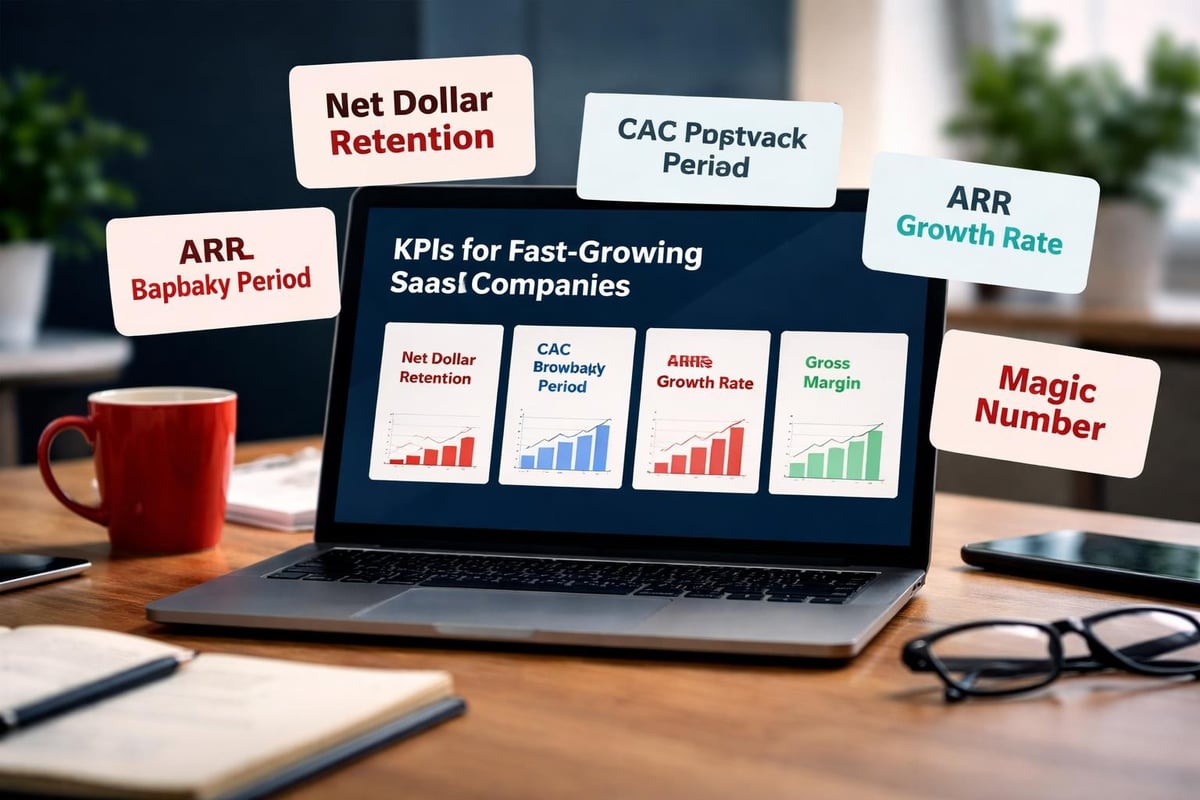
Market conditions in 2026 demand even greater operational excellence. Statista's data on worldwide SaaS revenue growth reveals the industry's continued expansion, but competition intensifies as more players enter every category. Companies must differentiate not just through product features but through superior execution across sales, marketing, customer success, and partnerships.
The fastest growing SaaS companies leverage multiple growth channels simultaneously rather than relying on single tactics. This multi-threaded approach creates resilience and accelerates customer acquisition while building sustainable competitive advantages.
Product-led growth (PLG) has emerged as a dominant strategy among rapid-growth companies. By allowing customers to experience value before purchasing, companies reduce friction in the sales process and let the product itself drive expansion. However, successful PLG implementation requires sophisticated activation strategies, usage analytics, and seamless upgrade paths from free to paid tiers.
Revenue growth accelerates when sales and marketing operate as a unified system rather than separate departments. The fastest growing SaaS companies implement:
When companies struggle with sales and marketing alignment, conducting a People and Technology Audit often reveals structural inefficiencies, role confusion, and technology gaps that inhibit growth. Addressing these foundational issues unlocks latent revenue potential.
| Growth Channel | Investment Level | Typical ROI Timeline | Best For |
|---|---|---|---|
| Content Marketing | Medium | 6-12 months | Thought leadership, SEO |
| Paid Acquisition | High | 1-3 months | Quick scaling, testing |
| Product-Led Growth | High | 3-9 months | Self-service models |
| Partnerships | Low-Medium | 6-18 months | Market expansion |
| Customer Advocacy | Low | 3-6 months | Trust building, retention |
The fastest growing SaaS companies recognize that acquiring customers represents just the beginning of the revenue relationship. Customer success has evolved from a support function into a strategic growth driver that directly impacts expansion revenue and net retention rates.
Elite performers structure customer success teams around outcome delivery rather than ticket resolution. Success managers focus on ensuring customers achieve their business objectives through the software, creating advocates who expand usage, renew contracts, and provide referrals.
Expansion revenue often exceeds new customer acquisition revenue among mature SaaS companies. This shift occurs because:

Churn reduction represents the most overlooked growth lever. A company growing new ARR at 50% annually but experiencing 30% gross churn achieves only 20% net growth. Reducing churn from 30% to 15% more than doubles net growth without increasing acquisition spending. Understanding what SaaS founders can learn from explosive growth reveals how retention-focused strategies compound over time.
The fastest growing SaaS companies invest heavily in operational infrastructure long before reaching large scale. This forward-thinking approach prevents the organizational chaos that typically accompanies rapid expansion and enables teams to execute effectively under pressure.
Technology stack decisions impact growth velocity more than most executives recognize. The right tools enable:
Hypergrowth companies structure teams differently than their slower-moving peers. Key organizational principles include:
Cross-functional pods that combine product, engineering, marketing, and sales resources around specific customer segments or use cases create autonomy and accountability. These teams move faster because they control all resources needed to drive outcomes.
Clear decision rights prevent the consensus-seeking that slows organizations. The fastest growing SaaS companies empower individuals to make decisions within defined parameters rather than requiring multiple approval layers.
Revenue-focused metrics cascade throughout the organization, ensuring every function understands its contribution to growth. Engineering teams track feature adoption rates, marketing measures pipeline generation, and customer success owns net retention.
Role clarity becomes critical during rapid scaling. As executives transition from tactical execution to strategic leadership, organizational structures must evolve to support new skill requirements and decision-making processes.
The fastest growing SaaS companies leverage partnerships to access distribution channels, complementary technologies, and customer segments that would take years to build independently. Strategic partnerships accelerate growth while reducing customer acquisition costs and expanding total addressable market.
Technology partnerships create ecosystem advantages that individual companies cannot replicate alone. Integration with widely-adopted platforms immediately increases product value and reduces implementation friction. Companies appearing in marketplace directories benefit from inherent trust and qualified buyer intent.
| Partnership Type | Primary Benefit | Growth Impact | Implementation Complexity |
|---|---|---|---|
| Technology Integration | Product enhancement | High | Medium |
| Reseller/Channel | Distribution expansion | Very High | High |
| Co-Marketing | Audience access | Medium | Low |
| Referral | Qualified leads | Medium | Low |
| OEM/White Label | Market penetration | High | Very High |
Reseller and channel partnerships provide the fastest path to new geographic markets or industry verticals. By leveraging partners' existing customer relationships and market knowledge, SaaS companies bypass years of relationship-building and market education.

However, partnership success requires dedicated resources and structured programs. The fastest growing SaaS companies assign partnership managers, create comprehensive enablement materials, establish clear economic incentives, and measure partnership contribution rigorously. Treating partnerships as a core growth channel rather than an afterthought separates winners from laggards.
Revenue growth accelerates when companies optimize how they package and price offerings. The fastest growing SaaS companies continuously experiment with pricing models, identify willingness-to-pay patterns across customer segments, and align pricing with value delivery rather than cost-plus calculations.
Usage-based pricing has gained significant traction because it aligns customer costs with realized value. Customers start small with minimal financial commitment, then spending scales naturally as they derive more value. This model reduces sales friction while creating built-in expansion revenue.
Choosing the right value metric-the unit customers pay for-fundamentally impacts growth trajectory. Elite SaaS companies select metrics that:
For example, charging per user works when each additional user creates incremental value for the customer organization. Conversely, per-feature pricing often constrains growth because customers resist paying more for functionality they view as fundamental.
Tiered packaging strategies serve different customer segments while creating natural upgrade paths. The fastest growing SaaS companies typically offer three to four tiers, each designed for distinct buyer personas with different needs, budgets, and value expectations. Strategic tier design encourages customers to start at lower tiers then expand as their requirements grow.
The fastest growing SaaS companies often don't compete in existing categories-they create new ones. Category creation allows companies to define buying criteria, set competitive comparisons, and capture market leadership before competitors establish footholds.
Category creation requires consistent messaging that educates markets about problems customers didn't realize they had and solutions they didn't know existed. The SaaS 1000 list demonstrates how emerging categories produce some of the highest-growth companies precisely because they face less direct competition during critical early scaling phases.
Positioning against established competitors demands clarity about differentiation. Companies must articulate specific advantages-whether speed, ease of use, industry specialization, or integration depth-that resonate with target segments. Vague positioning as "better" or "more innovative" fails to drive purchase decisions.
Thought leadership establishes credibility that supports rapid growth. The fastest growing SaaS companies produce original research, publish data-driven content, speak at industry events, and build executive profiles. This visibility creates inbound demand, shortens sales cycles, and commands premium pricing.
Growth acceleration requires replacing intuition with evidence. The fastest growing SaaS companies instrument every customer interaction, analyze behavioral patterns, test hypotheses systematically, and iterate rapidly based on results.
Analytics infrastructure enables:
Real-time dashboards ensure leadership teams base decisions on current data rather than outdated reports. When metrics decline, fast-growth companies diagnose root causes immediately and implement corrections within days rather than quarters.
Experimentation culture separates market leaders from followers. The fastest growing SaaS companies test pricing variations, messaging alternatives, onboarding sequences, and feature sets continuously. They structure experiments rigorously with control groups, statistical significance requirements, and clear success criteria. This scientific approach eliminates guesswork and compounds improvements over time.
People constraints limit growth more than capital or market opportunity. The fastest growing SaaS companies treat talent acquisition as a strategic priority requiring dedicated resources, systematic processes, and executive involvement.
Hiring ahead of revenue creates capacity for growth rather than reacting to demands after they arise. Companies scaling effectively build recruiting pipelines, maintain relationships with potential hires, and move quickly when opportunities emerge. Top performers extend offers within days of identifying candidates rather than weeks or months.
The best SaaS companies hire for trajectory rather than pedigree. They identify candidates demonstrating learning velocity, adaptability, and results orientation regardless of credential signals. This approach accesses broader talent pools and often produces stronger performers than traditional credential-focused hiring.
Development programs scale expertise across growing teams. The fastest growing SaaS companies document processes, create training materials, establish mentorship systems, and invest in continuous learning. This infrastructure enables new hires to contribute quickly and maintains quality as headcount increases.
Strategy matters little without flawless execution. The fastest growing SaaS companies establish operating rhythms that maintain focus, drive accountability, and enable rapid course correction.
Weekly business reviews ensure leadership teams stay current on performance against targets. These meetings examine leading indicators like pipeline generation, conversion rates, and customer health scores rather than trailing metrics like closed revenue.
Quarterly planning cycles balance strategic thinking with tactical execution. High-growth companies set ambitious but achievable quarterly objectives, allocate resources accordingly, and review progress transparently. This cadence provides enough time to accomplish meaningful objectives while maintaining agility to adjust as markets evolve.
The fastest growing SaaS companies succeed through exceptional execution across sales, marketing, customer success, partnerships, and operations rather than relying on product innovation alone. Breaking through revenue plateaus requires addressing structural inefficiencies, aligning teams around shared objectives, and implementing sophisticated growth strategies that compound over time. If your organization has been stuck at a certain revenue number and needs to accelerate growth, ApetureCodex specializes in transforming operational capabilities and implementing the proven strategies that power sustainable revenue expansion.